Cybersecurity audit and penetration testing (pentest)

Oxydian carries out cybersecurity audits and penetration tests (pentests) to identify and fix vulnerabilities before they are exploited, for SMEs, mid-caps, local authorities and large accounts.

Based in Labège, near Toulouse, the team carries out audits on site throughout France and Europe.

What is a cybersecurity audit (pentest)?

A cybersecurity audit, or penetration test (pentest), is a controlled assessment of an information system’s security: real-world attack techniques are reproduced on an agreed scope to identify exploitable vulnerabilities, measure their impact and rank them in an actionable report.

The threat primarily affects mid-sized organisations: according to the 2025 Cyber Threat Overview published by ANSSI, the French national cybersecurity agency, 48% of ransomware victims are very small businesses, SMEs and mid-caps, and the agency handled 1,366 security incidents over the year. The European NIS 2directive, currently being transposed into French law, also makes regular audits mandatory for essential entities, and ANSSI recommends starting compliance work without waiting for the implementing decrees.

What an audit delivers

  • Demonstrated flaws, not assumed onesEvery vulnerability reported has been exploited or verified, with its evidence and its real severity.
  • A prioritised action planFixes ranked by impact and effort, readable by management and technical teams alike.
  • Verifiable proofA signed certificate that can be checked online, then a retest of the fixes to make it last.

Vulnerability scan or penetration test: what is the difference?

An automated scan and a penetration test do not measure the same thing. The first lists what it recognises, the second demonstrates what an attacker gets.

Automated

Vulnerability scan

A tool sends known requests to each service and compares the answers with a database of public flaws. It goes straight ahead, and stops at the first defence it does not recognise.

  • Fast, repeatable, inexpensive: suited to regular monitoring.
  • Result: a list of possible flaws, with false positives and no business context.
  • Blind to logic errors, attack chains and anything hidden behind authentication.

Question answered: which known flaws are visible?

Manual, by an auditor

Penetration test (pentest)

An auditor reproduces an attacker's approach: bypassing, chaining and exploiting flaws until the real impact is demonstrated.

  • The scan is only a starting point: what matters happens in the manual analysis, the business logic, the permissions and the configurations.
  • Result: demonstrated attack paths, evidence, real severity, prioritised fixes.
  • A verifiable certificate at the end, and a retest available after remediation.

Question answered: can an attacker get in, and how far?

The two complement each other

The scan keeps watch between two audits: that is the role of the Oxyscan BOX, which audits the network continuously. A penetration test led by an auditor remains the true measure of resistance, on an agreed scope, with a certificate and a retest.
The Oxydian difference

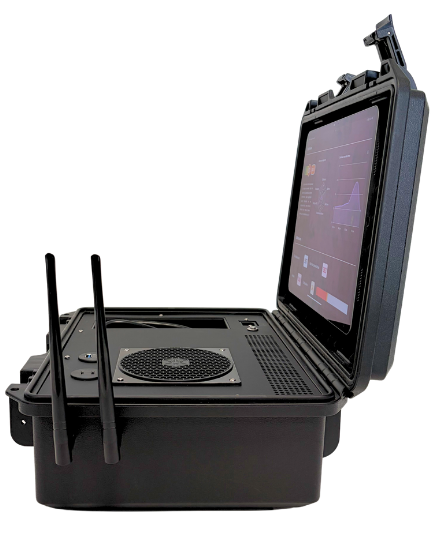
Auditors equipped with the Oxyscan Valise

Designed by Oxydian, the Oxyscan Valise automates mapping, scans, password analysis and reporting: the time saved goes to exploitation and chaining flaws.

Result: a penetration test that goes further, for the same audit time.

Discover the Oxyscan Valise

Types of audit

The main types of audit, suited to every environment and level of maturity.

External penetration test

From the internet, with no access at all: what a stranger can reach.

  • Websites, email, VPN, APIs, cloud, forgotten equipment
  • Mapping, flaws, chaining up to the first foothold
  • Report, action plan and certificate within days

The first thing to do when nothing has been tested yet.

Internal penetration test

From inside the network, with a workstation and a standard account: what an intruder or an employee can obtain.

  • Active Directory, file shares, passwords, segmentation
  • Wi-Fi: guest networks, encryption, access to the internal network from around the premises
  • Paths to privileged accounts and sensitive data
  • On site or remotely, on an agreed scope

The natural follow-up to an external test.

  • Web application audit

    Flaws in a web application: injections, privilege escalation, authentication bypass.

  • Architecture audit

    Review of an application or network architecture: best practices, segmentation, flows.

  • Code audit

    Code review looking for flaws, bad practices, exposed secrets or logic errors.

  • Configuration audit

    Compliance of hardware, software and cloud configurations with current security requirements.

  • Red Team engagement

    A targeted, realistic attack to test the organisation's detection and response capabilities.

  • Physical intrusion

    Physical security of premises: access, badges, surveillance, human or hardware weaknesses.

  • Mobile application audit

    iOS and Android applications: local data storage, exchanges with APIs, bypassing of security controls.

  • Retest

    Targeted verification that vulnerabilities found in a previous audit have been fixed.

Audit and pentest methodology

Oxydian applies a proven approach based on international standards (OWASP, PTES, NIST).

01

1. Planning
Defining the objectives and scope of the audit, so that tests match the organisation’s priorities.

02

2. Reconnaissance
Mapping assets and gathering information to identify the attack surface.

03

3. Exploration
Manual search for exploitable vulnerabilities, supported by the Oxyscan Valise, the tool designed by Oxydian that automates the time-consuming tasks.

04

4. Exploitation
Controlled attack simulation to confirm the presence and impact of the identified flaws and the resistance of the targets.

05

5. Report & action plan
Delivery of a report detailing the actions performed, the vulnerabilities found ranked by severity, and tailored recommendations to improve security.

Audit profiles: black, grey or white box

The profile sets what the auditor knows at the start. It determines the scenario simulated, the depth of testing and the time required.

Information provided at the start
Realism of an external attack
Scope coverage

Indicative reading: each profile trades realism against thoroughness.

Black box attack profile

Black box

The outside attacker, with no inside knowledge.

What is provided
The name, a scope (IPs, domains, URLs) and a time window. Nothing else.
Scenario simulated
An attacker from the internet, starting from scratch.
When to choose it
First test, external exposure, insurer or customer requirement.
Grey box attack profile

Grey box

The compromised account, or the insider overstepping their rights.

What is provided
One or more standard accounts and the general context.
Scenario simulated
Stolen account, malicious employee or contractor, customer trying to reach other customers' data.
When to choose it
Multi-role application, internal network and Active Directory, annual audit.
White box attack profile

White box

The administrator's view: nothing is hidden.

What is provided
Administrator access, source code, diagrams, configurations.
Scenario simulated
Administrator or developer: everything can be checked, component by component.
When to choose it
Code, configuration, architecture, compliance requirement.

Which profile to choose?

For a first audit, grey box offers the best balance between realism and depth. Black box measures what is visible from the internet, white box allows a complete review of the code or configuration. The profile is chosen together, during the scoping meeting.
The audit report

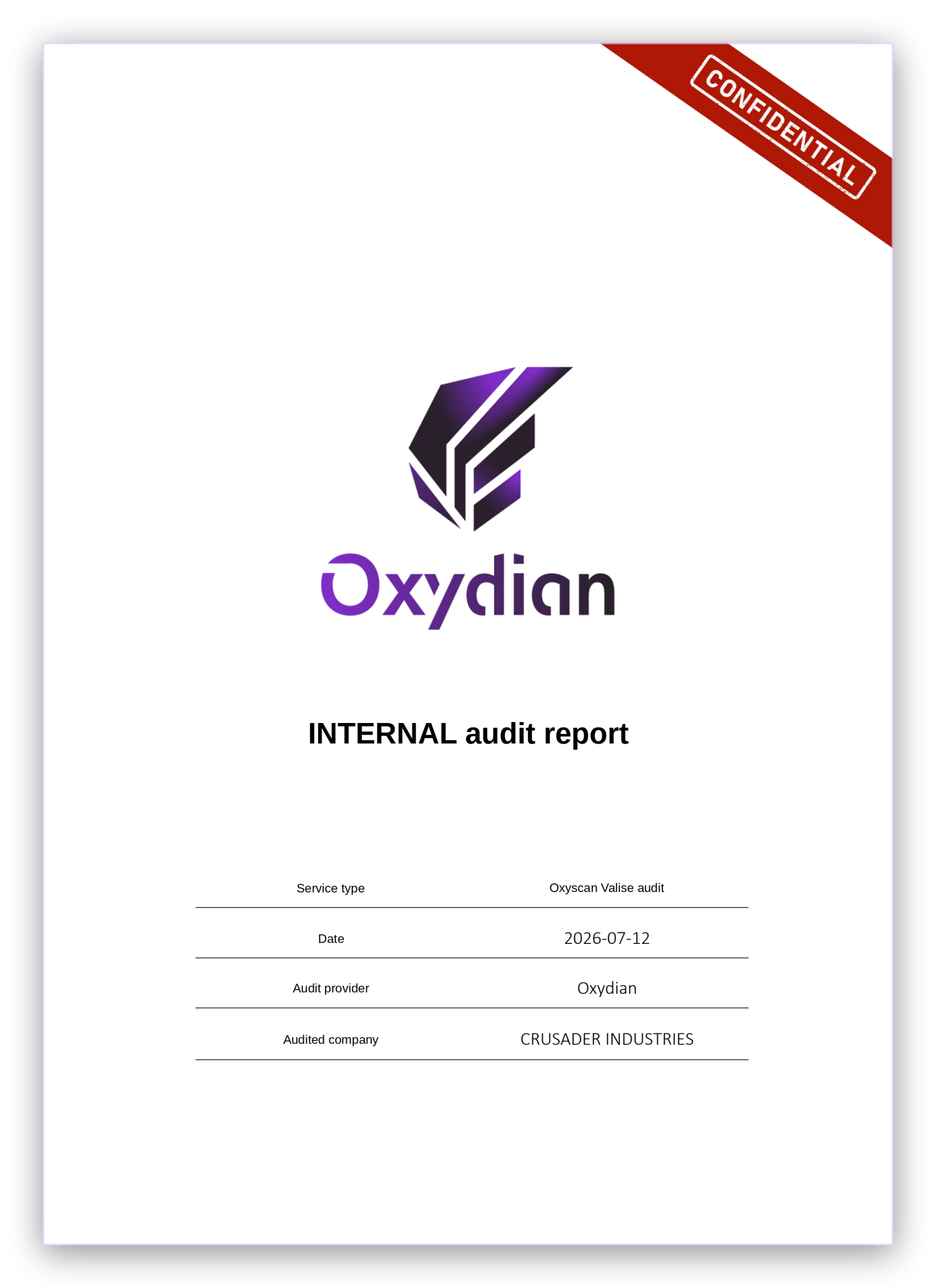
The audit report is clear, detailed and actionable, designed for technical teams and decision-makers alike. It gives a complete picture of the organisation’s cybersecurity, with concrete, prioritised fixes to make remediation easier.

Contents (around 100 pages):

How much does a cybersecurity audit cost?

The quote is based on a number of days of work, set after a free 30-minute scoping call. Four factors change that number.

Scope

Number of targets, applications, sites and roles to test.

Profile

Black, grey or white box: the white box requires more analysis.

Depth

Quick test, standard audit or long engagement with chained attacks.

Options

Retest after remediation, on-site debrief, remediation support.

Estimate the length of an engagement

Indicative order of magnitude, not a quote. The scoping call sets the final figure.

Indicative duration
4 to 9 days of work
1 day1 week2 weeks3 weeks

A multi-role application tested from a standard account: time focuses on privilege escalation and data segregation.

Included in every engagement

  • Scoping call and written scope
  • Tests on the agreed scope, without disrupting production
  • Full report: executive summary, action plan, vulnerability details
  • Debrief for technical teams and decision-makers
  • Audit certificate verifiable online

Optional

  • Targeted retest after the flaws are fixed
  • Remediation support
  • On-site debrief
  • Continuous monitoring between two audits with the Oxyscan BOX

Frequently asked questions

Why run a pentest?

To find vulnerabilities before an attacker does, meet regulatory requirements (HDS, ISO 27001, GDPR, NIS 2) or reassure customers and partners about the security of the systems.

How much does an audit cost?

The cost depends on the scope (number of targets, applications, sites), the profile chosen (black, grey or white box), the duration of testing and options such as a retest after remediation. Each engagement is sized by quote, after a free 30-minute scoping call. The section How much does a cybersecurity audit cost details these four factors and offers an indicative duration estimator.

How long does an audit take?

From 3 days to 3 weeks, depending on the size of the infrastructure or scope audited.

Does the audit disrupt operations?

No. The tests are designed not to disrupt production. The most intrusive actions, which could cause disruption, are only carried out with the organisation’s prior agreement or on a dedicated test environment.

Is support available after the audit?

Yes. Oxydian’s experts remain available to advise during remediation, carry out a retest to validate the fixes, or support the overall improvement of security.

Does access need to be provided for the audit?

It depends on the profile chosen. In black box, no initial access is provided. In grey box, limited access is provided. In white box, the organisation hands over complete technical information.

Vulnerability scan or penetration test: what is the difference?

An automated scan compares service responses with a database of known flaws and produces a list of possible vulnerabilities, with no context or verification. A penetration test is carried out by hand by an auditor who bypasses, chains and exploits flaws until the real impact is demonstrated. Oxydian’s auditors rely on the Oxyscan Valise, designed in-house, to automate time-consuming tasks and devote expert time to exploitation and chaining. The scan suits monitoring between two audits; the penetration test measures real resistance.

Which profile should be chosen for a first audit?

Black box for an organisation never tested before, or for an internet-facing scope. Grey box for a multi-role application or an internal network. White box when the code, the configuration or a compliance standard is the subject. The scoping call settles it.

What is an external penetration test?

A test carried out from the internet, with no initial access, on publicly reachable services: websites, email, VPN, APIs, cloud. It maps the exposed surface, finds and exploits flaws in a controlled way, then delivers an action plan and a verifiable certificate.

What does the audit report contain?

An executive summary, a prioritised action plan, the compromise scenarios, a map of the scope, a password analysis where relevant, and the details of each vulnerability with its fix. Around 100 pages, readable by decision-makers and technical teams alike.

Audit certificate

At the end of each audit, an official certificate is issued to the organisation, attesting that the audit was carried out on its information system.

This one-page summary presents the main findings without disclosing sensitive data.

It is delivered through Oxydian’s secure exchange platform, electronically signed, and its authenticity can be checked at any time on a dedicated online portal.

A 30-minute call

A conversation with a cybersecurity expert for an outside view of the information system’s protection: stakes, priorities and first avenues for improvement.

In 30 minutes: the methodology, the deliverables, the analysis tools and advice tailored to the organisation’s situation.

Contact

Reply within 1 business day. Your data is only used to respond to your request. Privacy policy

Free 30-min assessment
Security audit and penetration testing icon

A FREE 30-minute ASSESSMENT, no strings attached!

Oxydian gives you the opportunity to quickly assess your cybersecurity maturity level during a 15- to 30-minute video call.

Speak directly with an expert, identify your needs, and receive 100% personalised recommendations, with a report ranked by priority.

Want to assess yourself independently?

An online self-assessment is also available to give you an initial overview of your security level by calculating your cyber score.